Honestly, for months, I just blamed my ad creatives for my low Shopify conversion rate.
Sales were flat. CPAs kept climbing. I tested new hooks, new angles, new offers, and the needle barely moved. So I finally sat down and did the boring, unglamorous thing every dropshipper and brand owner tries to avoid: I watched a few hours of session recordings.
That’s when it hit me. The problem wasn’t my ads. It was where my ads were sending people.
A standard Shopify product page is totally fine if your traffic already knows you. For returning customers and branded search, the default template does its job—it’s clean, professional, and functional. But the moment you start pointing cold, paid traffic at it? You’re basically setting your ad budget on fire.
Cold buyers don’t browse. They decide. And the standard e-commerce template is practically designed to break that decision before it even happens.
So I ran an experiment. I took one of our products (a sleep tape SKU we’d been struggling to scale) and rebuilt the entire product page as a dedicated, single-product funnel. Same product. Same audience. Same ad spend. Just a different destination.
Here is exactly what was broken with the original—and what the funnel rebuild did to fix it.
The Problem: The “Generic Shopify” Trap
The original product page looked fine. Clean theme, decent product photos, a buy button right where you’d expect it. From a design standpoint, nothing felt wrong. But from a conversion standpoint, it was a total minefield.
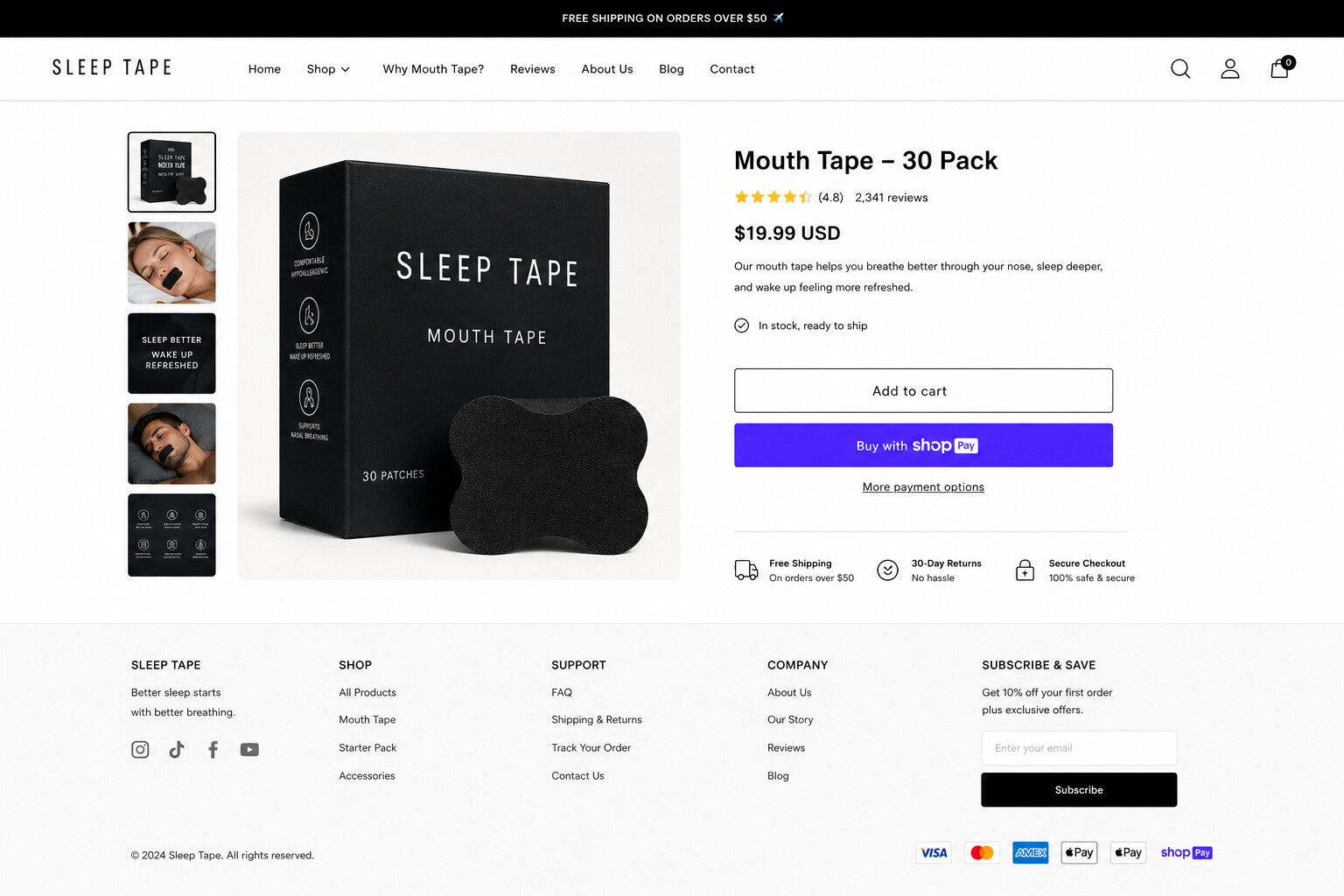
Start with the header.
Seven menu items: Home, Shop, Why Mouth Tape?, Reviews, About Us, Blog, Contact. That is seven exit ramps before the visitor has even scrolled. Cold traffic gets distracted easily—if you give them somewhere else to click, they will take it. And once they’re wandering around your blog or your About page, you’ve already lost the sale.
Then you hit the footer.
Another dozen links. More exit ramps, plus newsletter signups, social icons, policy pages—every single one of them is just another reason to leave without buying.
And the product copy?
It was literally one sentence: “Our mouth tape helps you breathe better through your nose, sleep deeper, and wake up feeling more refreshed.” That was the entire pitch. No storytelling. No objection handling. No reason for a skeptical first-time visitor to actually believe any of it.
To make matters worse, clicking the star ratings for reviews popped open a clunky widget, completely breaking their buying flow.
When you send cold paid traffic to a page like that, you are asking the buyer to do all the heavy lifting themselves. Read the one-line description. Decide on faith. Resist the menus. Stay focused. Click the button. That is a massive ask for someone who just clicked a TikTok ad 12 seconds ago.
The Solution: The Dedicated Funnel Page
The Funnelish rebuild isn’t just a prettier product page. It’s a completely different beast: a persuasion engine, built mobile-first (which is where most of your paid traffic is landing anyway), with one single job: convert this visitor or send a clean “no” back to the ad data.
Here is what changed:
- Zero exits: No header menu. No footer link farm. No “related products” trying to cross-sell them too early. The only action on the page is to scroll down and buy.
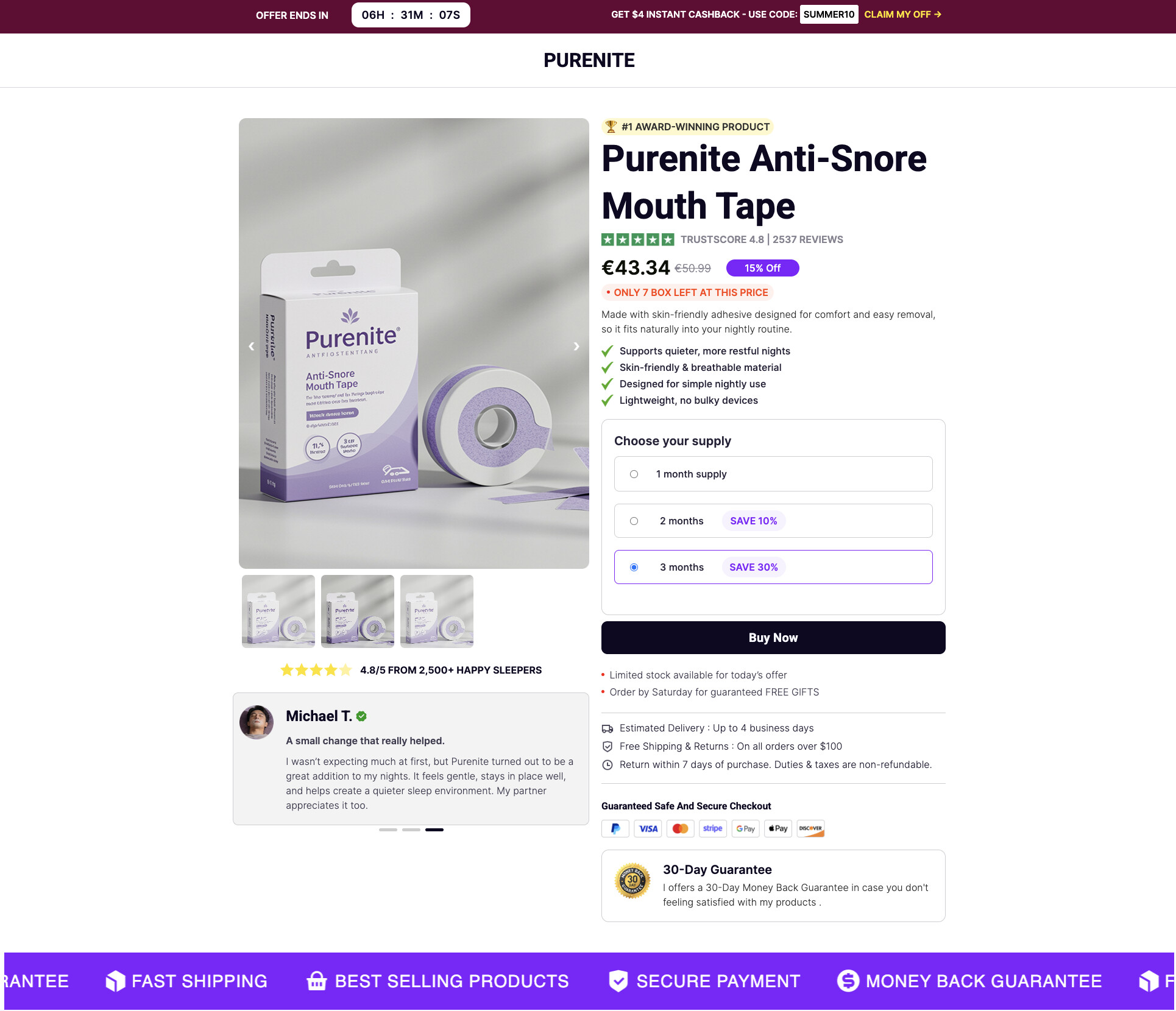
Some operators flinch at this—“but what about my SEO, my blog traffic, my brand discovery?”—but those audiences aren’t this page’s audience. The product page exists for cold paid traffic. Everything else still lives on your Shopify store where it belongs.
- A buy box that does the selling: The “Subscribe & Save” offer is baked directly into the buy buttons with high-contrast pricing.
The recurring option looks like the obvious, no-brainer choice without anyone needing to argue for it.
- Real product storytelling: Instead of one blank sentence, we built out a proper “Why Mouth Tape?” section with visual icons explaining the actual benefits (Deep Sleep, Better Focus, No Snoring).
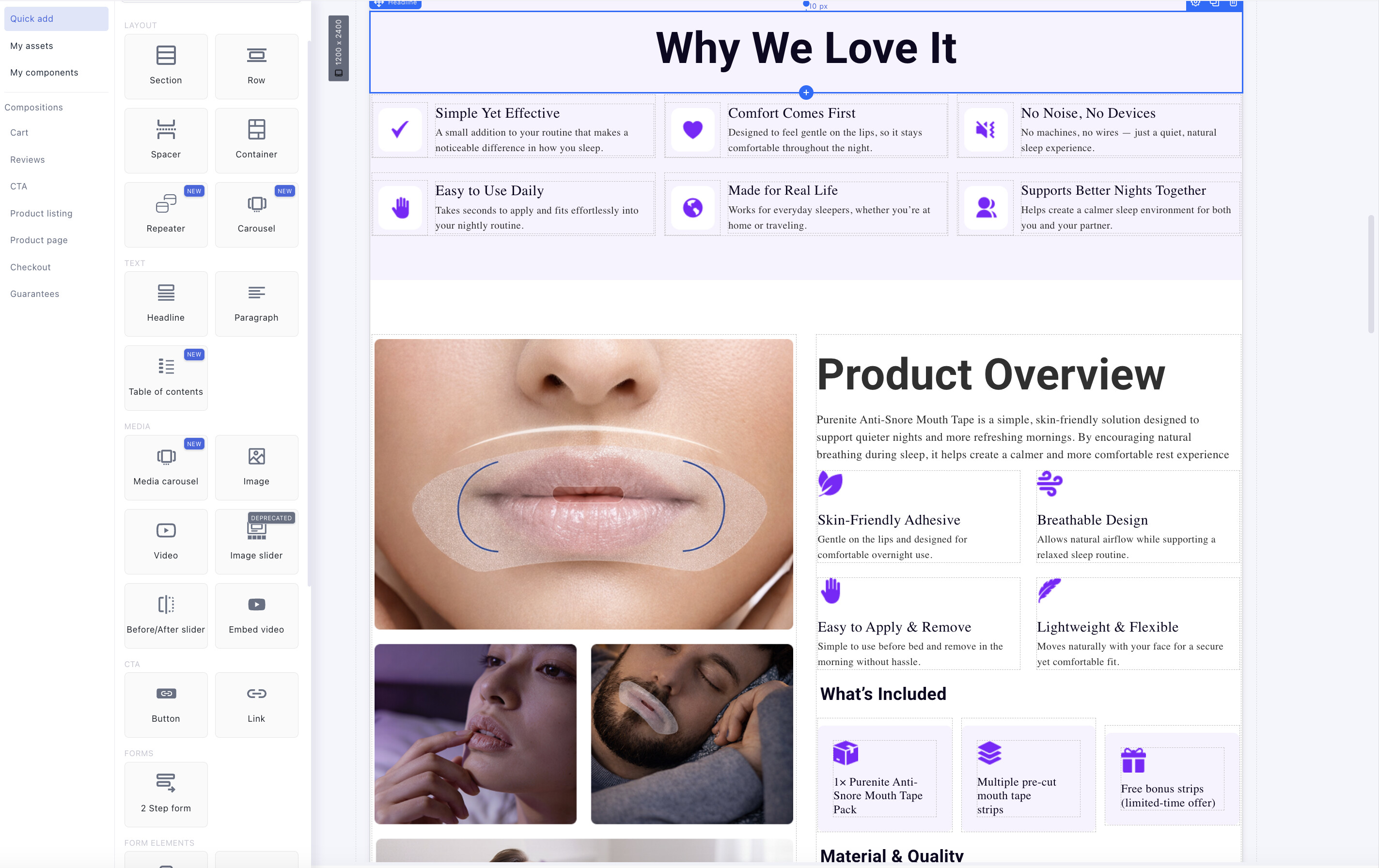
It’s not a wall of text; it’s a scrollable narrative that walks the buyer from “what is this?” to “I need this” without making them work for it.
- The “Us vs. Them” comparison: We added a direct table pitting mouth tape against CPAP machines and nose strips. This was probably the biggest psychological win on the page.
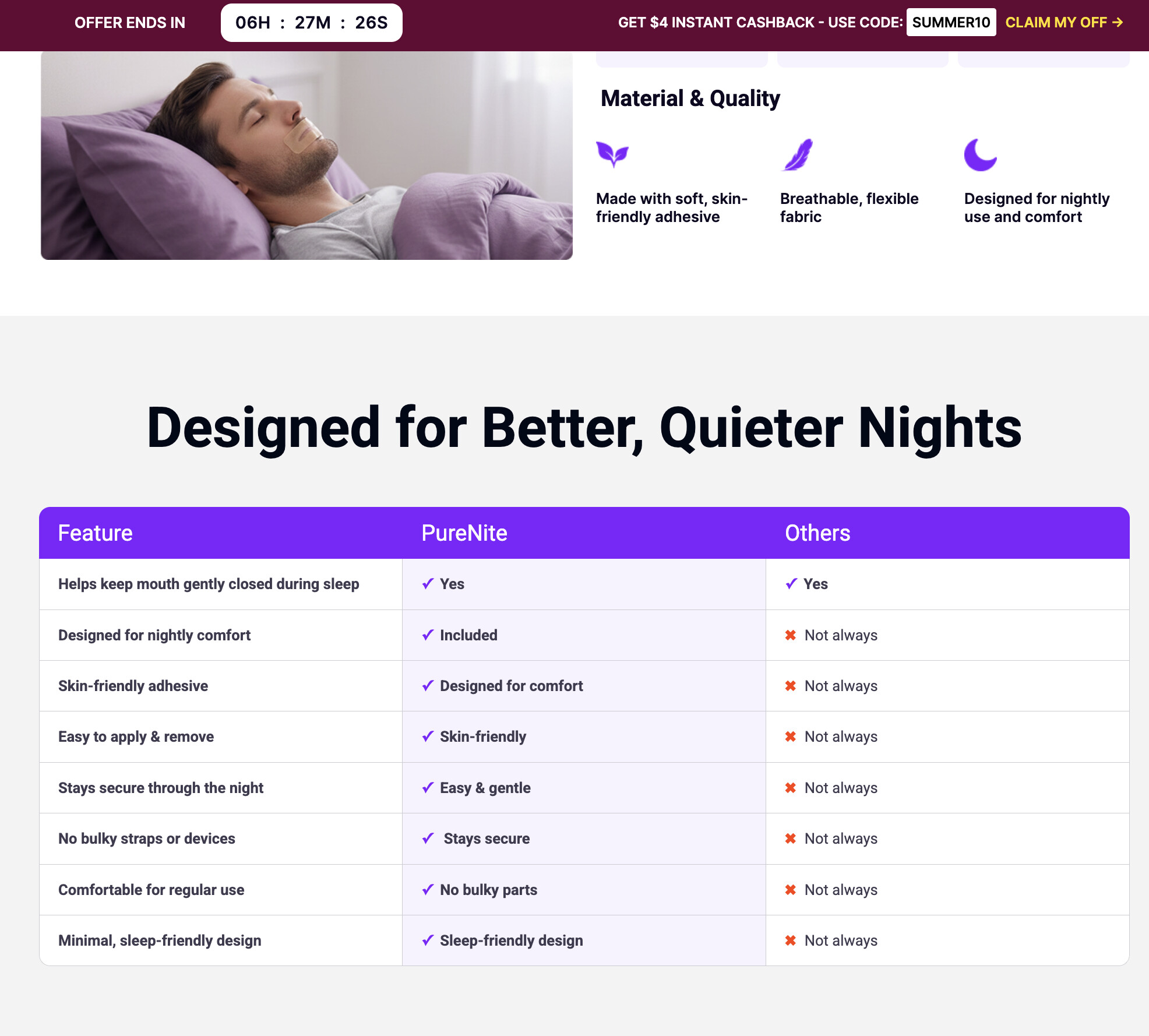
Comparison tables short-circuit the “should I just buy a different solution?” thought loop. The buyer doesn’t leave to Google alternatives because the alternatives are already on the page—and they are losing.
- An embedded “how to use” walkthrough: Buyers know exactly what they’re getting before they even reach checkout.
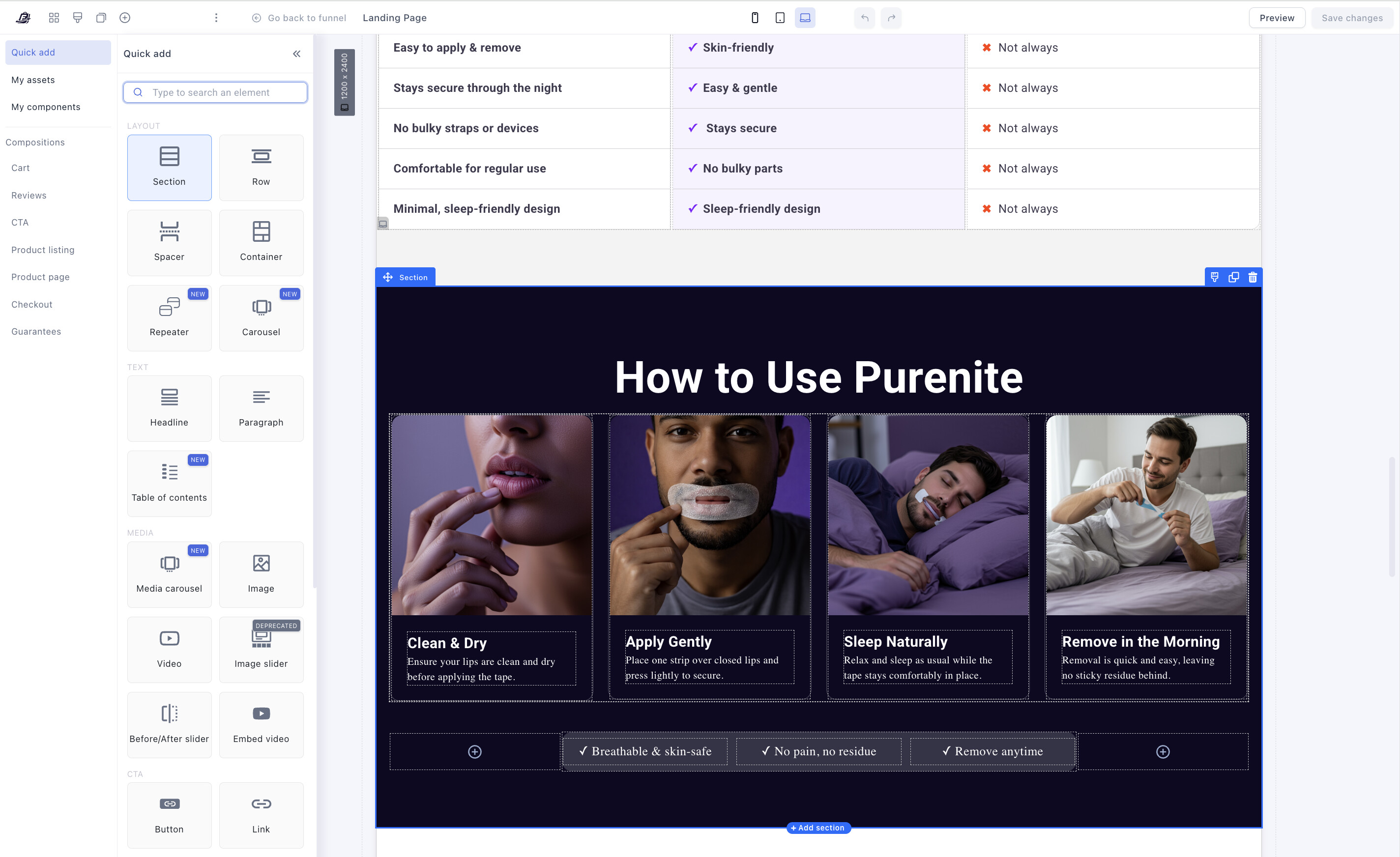
This quietly kills the “I’m not sure how this works” objection that ruins conversion rates on novel products.
- Reviews that don’t hide: We dropped dozens of real customer reviews directly onto the page.
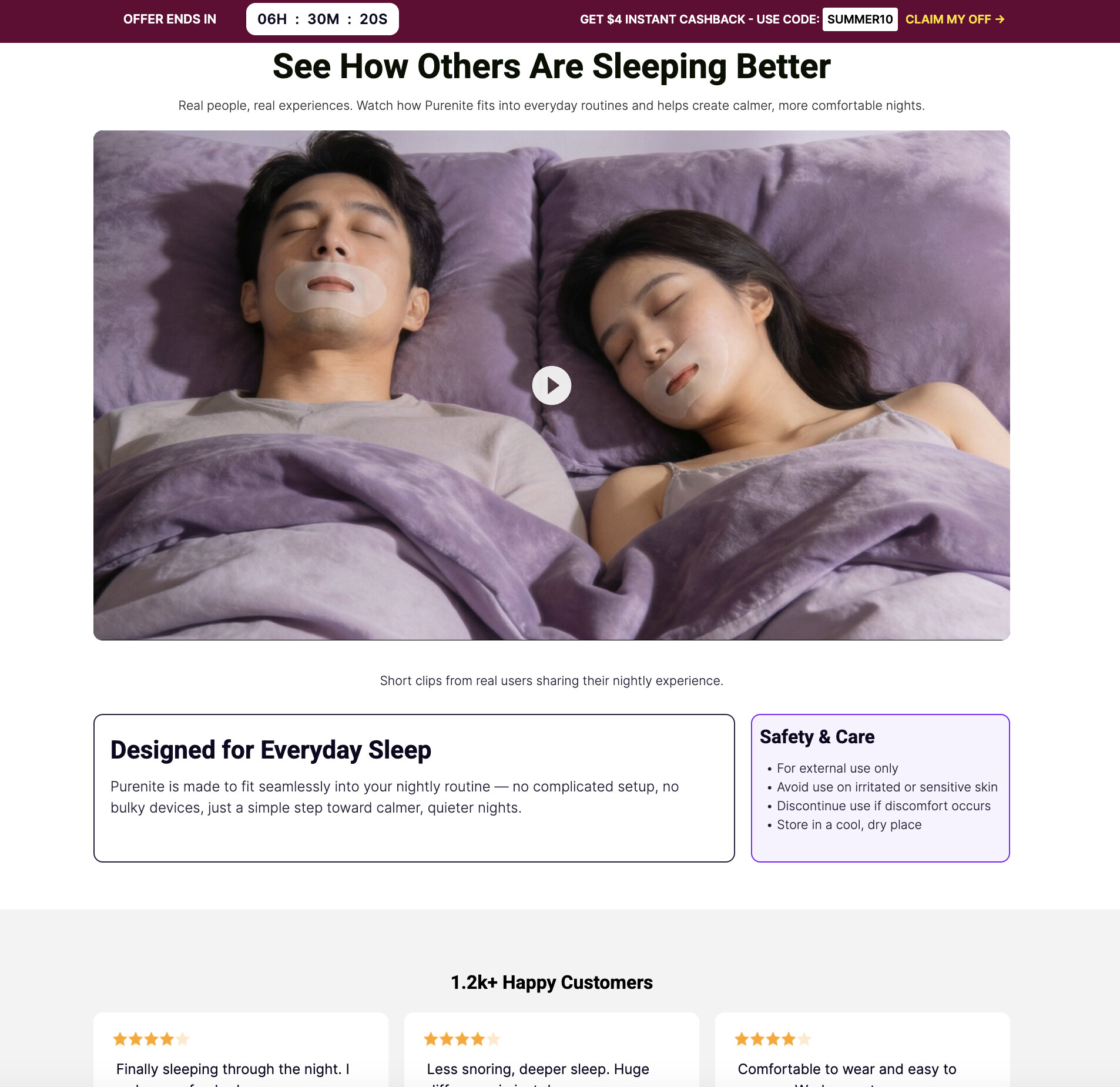
Cold traffic needs instant trust, and forcing them to read actual customer experiences organically as they scroll is infinitely more powerful than making them click a tiny star rating.
- An objection-killing FAQ section: Every time a cold buyer has to hunt for a “Contact Us” page to ask a question, you lose the sale. We baked a dedicated FAQ section right into the bottom of the funnel. It tackles shipping, returns, and the most common product doubts head-on, keeping them locked in the buying flow instead of bouncing away to find answers.
But Wait… What About My Shopify Back-End?
I know exactly what you are probably thinking right now, because it’s the exact question every operator asks at this point.
The whole reason we live on Shopify is because Shopify is great at being a store: inventory, fulfillment integrations, customer accounts, and all the app glue that runs in the background. Nobody wants to give that up.
The good news is, you don’t have to.
Funnelish syncs orders straight back into your Shopify store. Every sale that closes on the funnel shows up in Shopify as a regular Shopify order. Inventory deducts. Fulfillment apps fire. Customer records update. Your back-end doesn’t change at all.
You’re not migrating off Shopify. You’re just putting a much sharper conversion experience in front of it for the traffic that actually needs one. The rest of your store keeps running exactly the way it always has.
The Takeaway
Your Shopify store is an amazing catalog for returning customers, but a terrible landing page for cold ad traffic — and a quiet CVR killer
When you strip away the generic store menus, build a page that actually educates the buyer, and force them down a single focused path—your conversion rate has nowhere to go but up. You don’t need a miracle to bring your CPAs down. You just need to stop handing your paid traffic seven different reasons to leave before they buy!
Want to test this exact setup for yourself?
 Clone this funnel: Interested in the product page I used above?
Use this link to clone this product page template straight into your Funnelish account so you can swap in your own products and test it against your Shopify page.
-
 Got a question? If you run into any issues setting this up or syncing it with your Shopify backend, feel free to drop a reply below or start a new thread in the Ask the community section.
 -
 Browse more templates: We have plenty of other e-commerce and single-product templates waiting for you! If this specific design isn’t quite right for your brand, you can explore our full library, share your own creations, or request a custom layout in our Templates category.