If you spend any time in e-commerce circles, you’ll constantly see dropshippers bragging about their abandoned cart email flows.
“I just tweaked my subject line and got my recovery rate up to 12%!”
That’s great, and you absolutely should have a solid backend email sequence. But let’s take a step back and look at the math with a bit of brutal honesty: If you have a 12% recovery rate, it means 88% of the people who wanted to buy your product left and are never coming back.
Spending weeks optimizing an email flow to claw back a fraction of your lost sales is treating the symptom.
If you want to scale profitably, you need to cure the disease. And the disease is checkout friction.
Why They Are Actually Abandoning
When cold traffic clicks your ad and adds a product to their cart, they are operating on pure impulse. Their buying temperature is at an absolute peak.
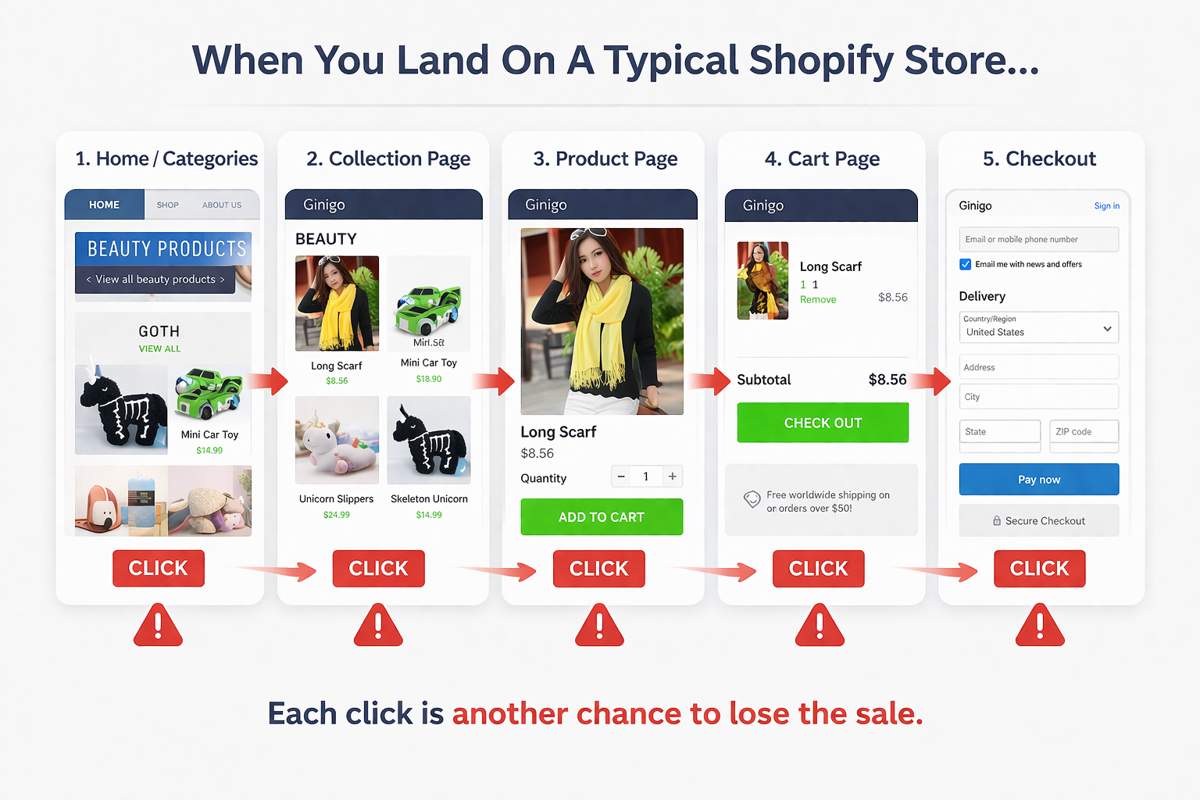
But what happens next on a traditional e-commerce store? You put them through a digital obstacle course:
-
The Cart Page: They have to review their order and click “Proceed to Checkout.” (Friction)
-
The Information Page: They have to type in their email and shipping address, then click “Next.” (Friction)
-
The Shipping Page: They have to select a shipping speed and click “Next.” (Friction)
-
The Payment Page: Finally, they get to enter their credit card.
Every single page load, every single button click, and every single second that passes gives their brain time to cool off. They get a text message, their dog barks, or they just second-guess the purchase—and boom. They close the tab.
You didn’t lose the sale because your product was too expensive. You lost the sale because your checkout process took too long.
The Solution: The 1-Page Checkout
Direct-response marketing is all about removing the roadblocks between the customer’s impulse and your bank account.
Instead of letting them bounce and praying your “Hey, you left something behind!” email brings them back 24 hours later, you need to compress the entire buying process into a single step.
Enter the One-Page Checkout.
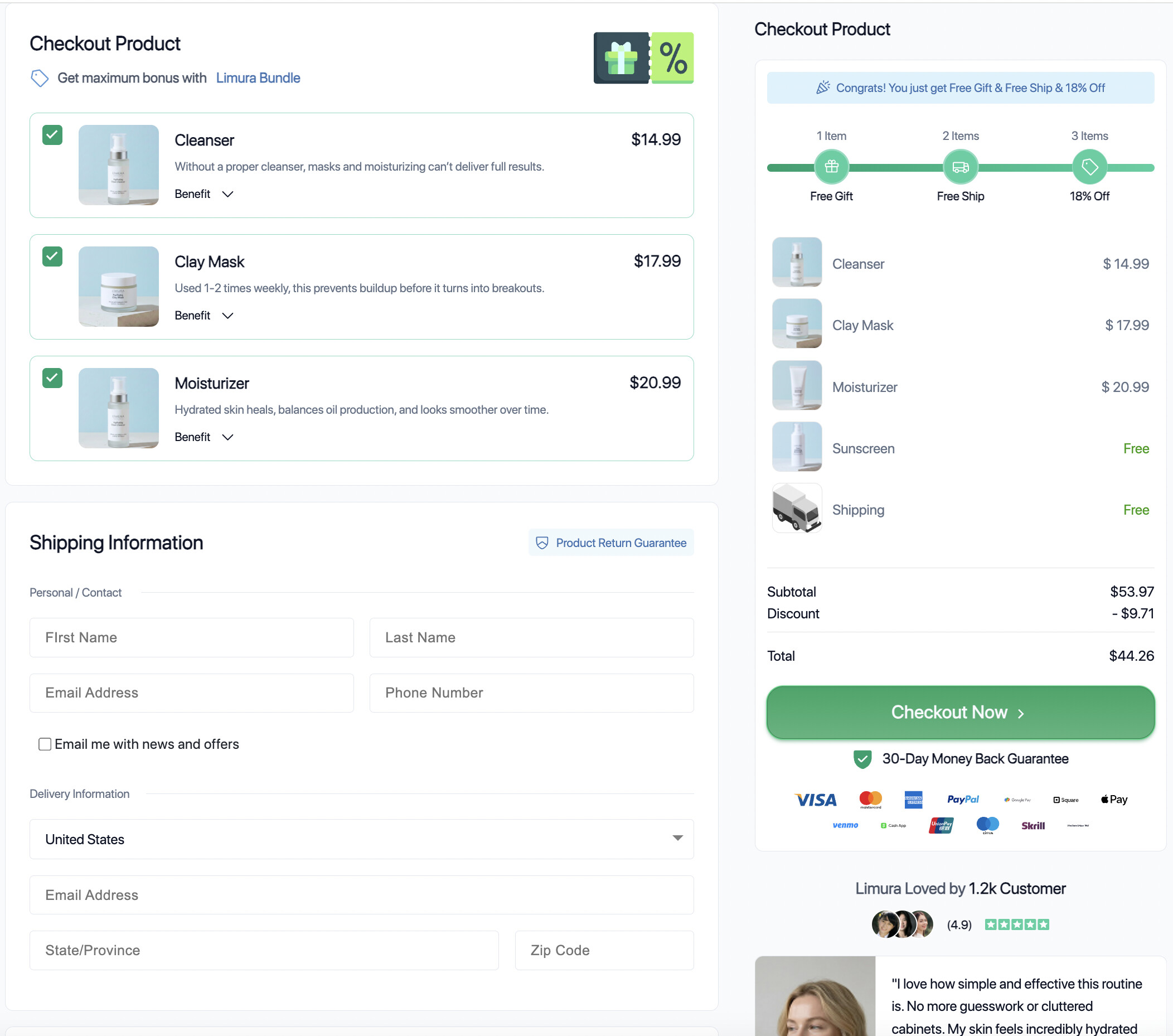
When you put the customer info, shipping details, and credit card fields all on one single, lightning-fast page, something magical happens to your conversion rate:
-
Zero Page-Load Drop-off: There are no “Next Step” buttons to wait for.
-
Visual Completion: The customer sees exactly what is required of them the moment the page loads. It feels fast and effortless.
-
Impulse Preservation: They can literally go from clicking your TikTok ad to completing the purchase in under 60 seconds.
How to Do This Natively in Funnelish
This exact problem is why Funnelish checkouts are designed the way they are.
Instead of relying on the clunky, multi-step native checkouts of traditional platforms, you can route your traffic directly to a Funnelish one-page checkout.
No apps, no custom coding, and no duct-taping plugins together. You just drop in the checkout elements, customize the styling to match your brand, and watch your initial conversion rate spike - which means you’ll instantly have fewer abandoned carts to worry about in the first place.
(Plus, because they are already on that single page with their wallet out, it’s the perfect time to drop in a pre-checked Order Bump to boost your AOV before they hit “Pay”.)
The Bottom Line
Yes, keep your abandoned cart emails running. But stop relying on them as your primary safety net.
If you fix the actual leak in your bucket, you won’t need to spend nearly as much time mopping up the floor.
 Let’s look at the data: Log into your ads manager or store analytics right now. What is your current drop-off percentage between “Initiate Checkout” and “Purchase”? Have you tested a multi-step checkout against a one-page checkout yet? Share your numbers below!