Most dropshippers are still running the exact same playbook: build a full catalog store, add dozens of products, set up a clean navigation menu, and hope cold traffic will browse and eventually buy something.
To be fair, this makes sense if you think about traditional e-commerce.
But here’s where that strategy breaks down for us.
When you’re running paid ads, especially on fast-paced platforms like TikTok or Meta, people aren’t in “browsing mode.”
They didn’t click your ad to explore your brand’s mission statement. They clicked because a specific hook caught their attention in that exact split-second.
When they land on a typical store, they hit a wall of friction:
-
Too many options.
-
Too many navigation links.
-
Not enough clarity on what they’re actually supposed to do next.
So they scroll a bit, click a random related product, check your homepage… and bounce. Not because your winning product is bad, but because decision fatigue killed the conversion.
The Dropshipping Problem Isn’t Your Product — It’s the Experience
Traditional stores were designed for discovery. Think Amazon. The whole architecture relies on the user exploring, comparing, and taking their time.
But that same strength becomes a massive liability when you’re dealing with cold, impulsive traffic. Instead of guiding the user to a buying decision, a store asks them to figure it out themselves. And most customers won’t.
And this is where most people lose the sale without even realizing it: The more decisions someone has to make, the more likely they are to do nothing at all.
What Actually Happens After the Click
In theory, someone clicks your ad, adds to cart, and buys.
In reality, the moment they land on a typical product page, their attention starts to bleed:
-
They notice the header menu.
-
They see a “You May Also Like” widget.
-
They get curious and click away from the main offer.
-
They lose focus.
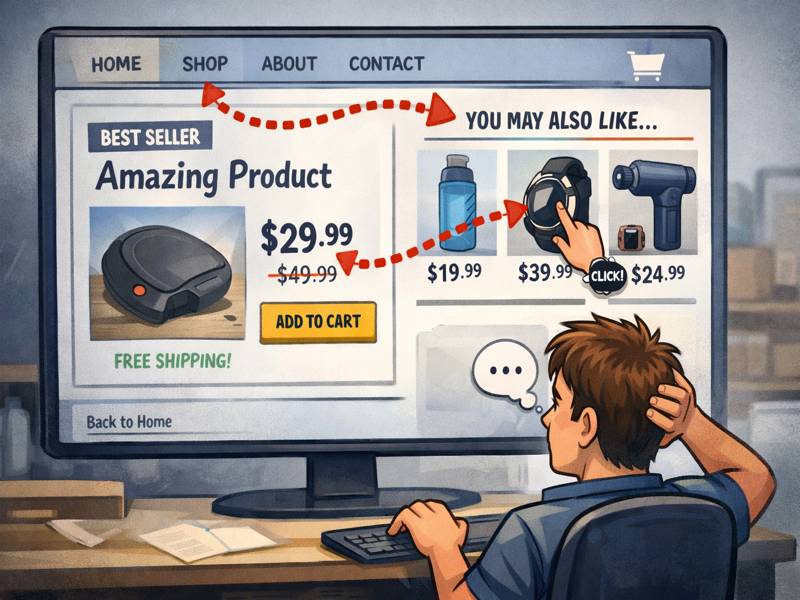
Within seconds, the original buying intent is gone. You just paid Mark Zuckerberg or TikTok for a click that never actually had a streamlined path to conversion.
The Shift: From Store to Funnel
This is exactly why experienced media buyers and dropshippers are moving to a much leaner, more aggressive model: 1 Product → 1 Funnel.
Instead of dropping traffic into a digital catalog where they can wander off, you guide them through a hyper-focused journey.
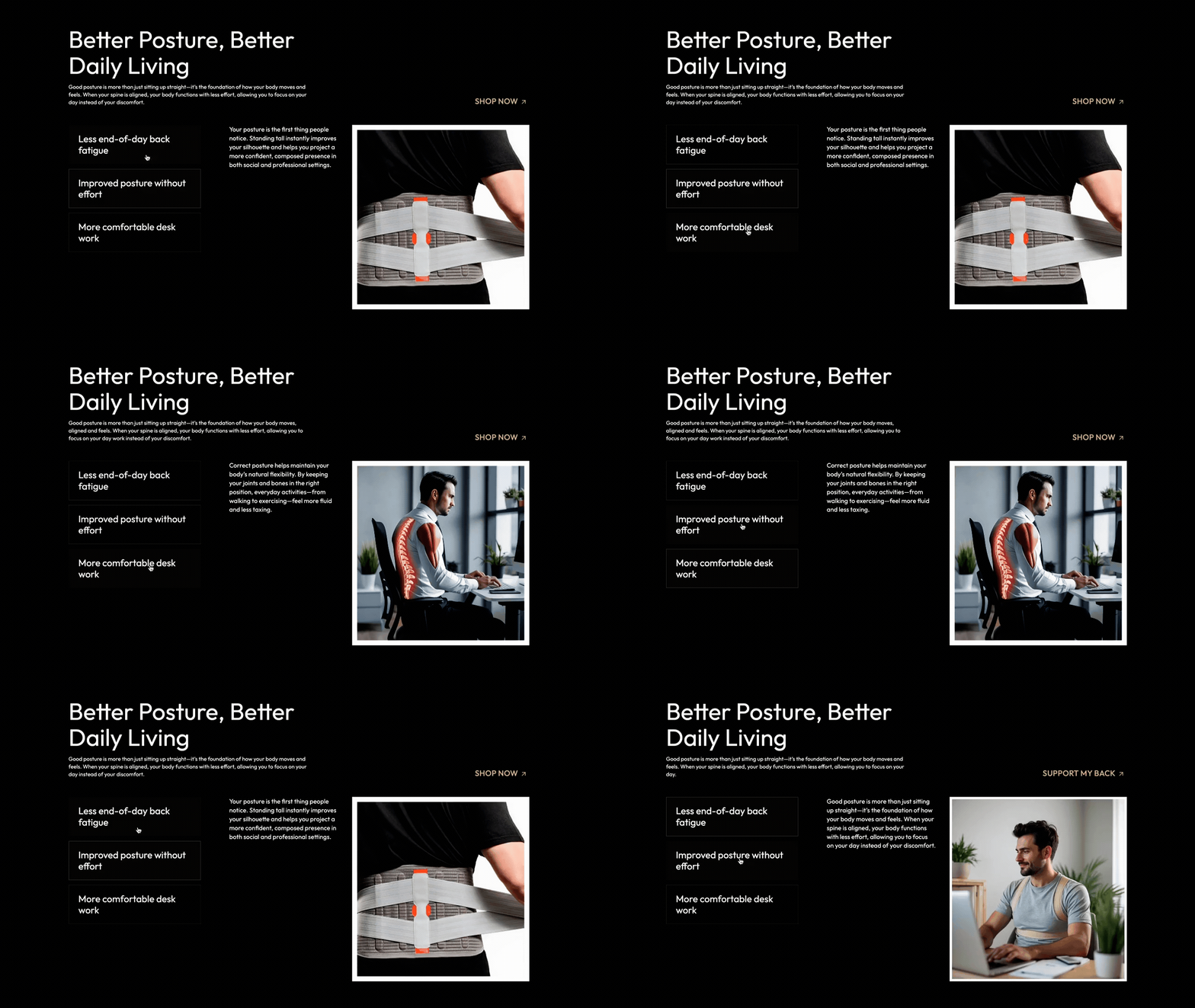
- The Landing Page: Speaks directly to one core problem and presents one irresistible offer.
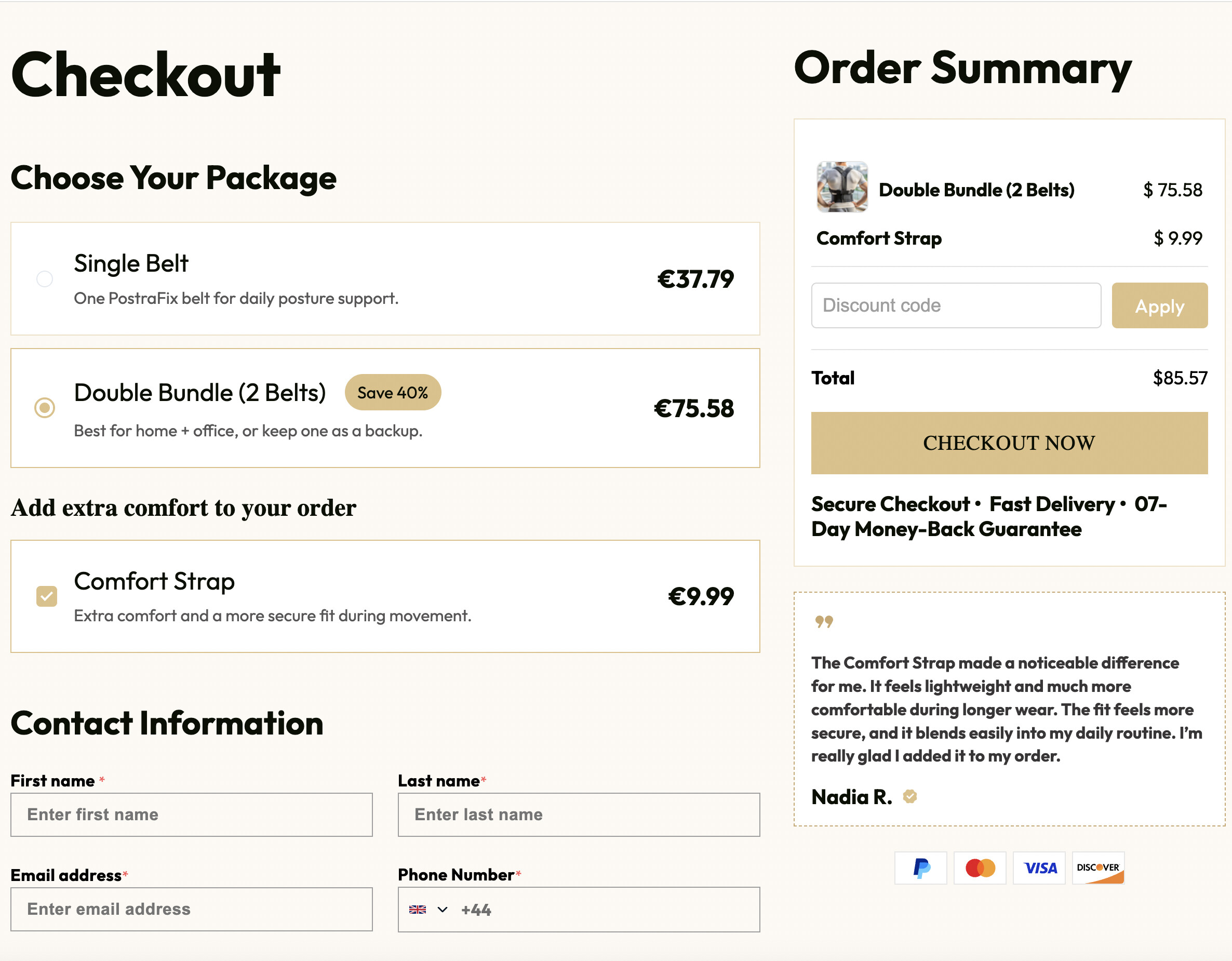
- The Checkout: A seamless, one-page checkout that removes all friction (this is where Funnelish truly shines).
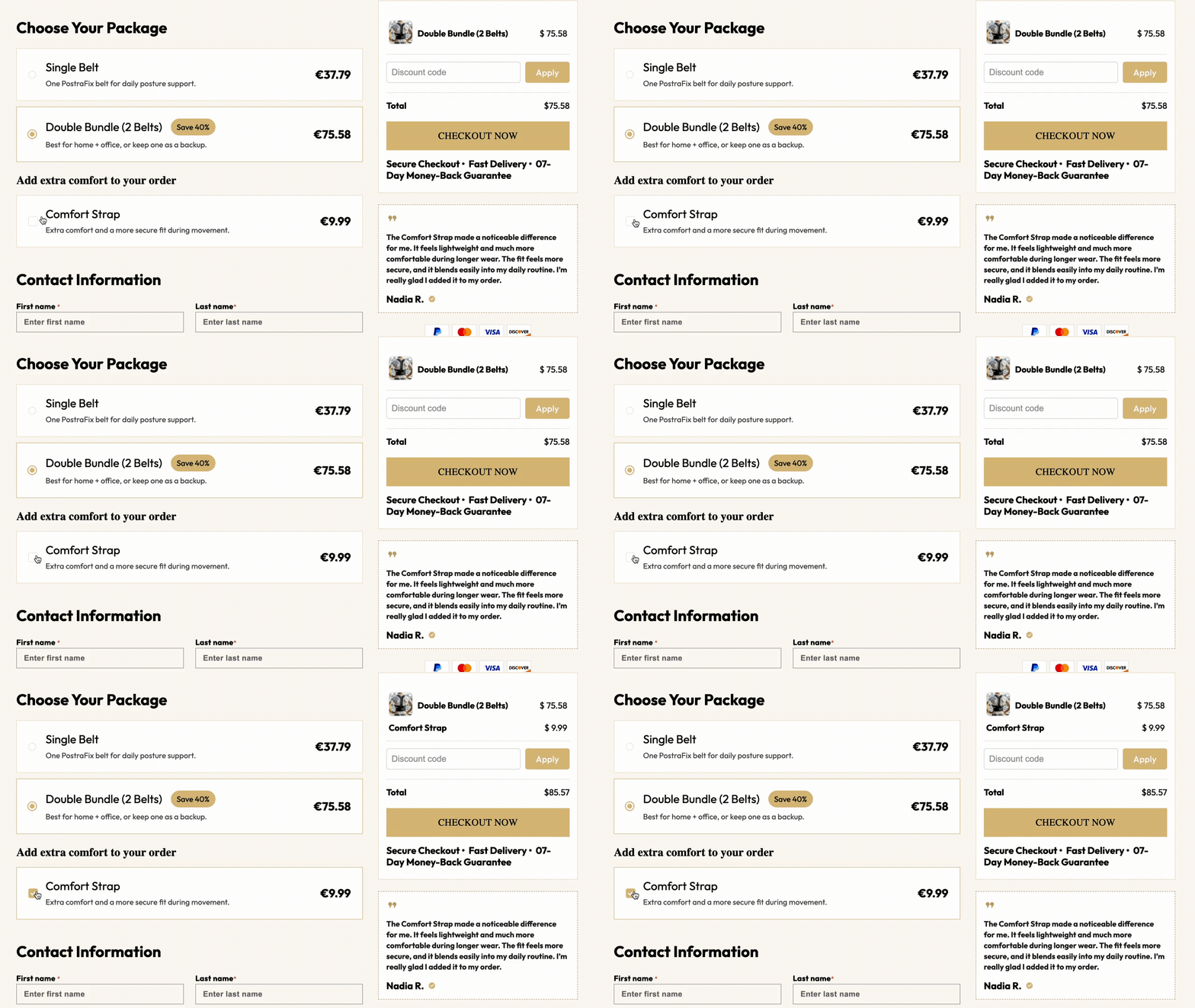
- The Order Bump: A pre-purchase add-on that captures impulse value.
- The Post-Purchase Flow: One-click upsells and downsells that maximize your AOV (Average Order Value) immediately after their wallet is out.
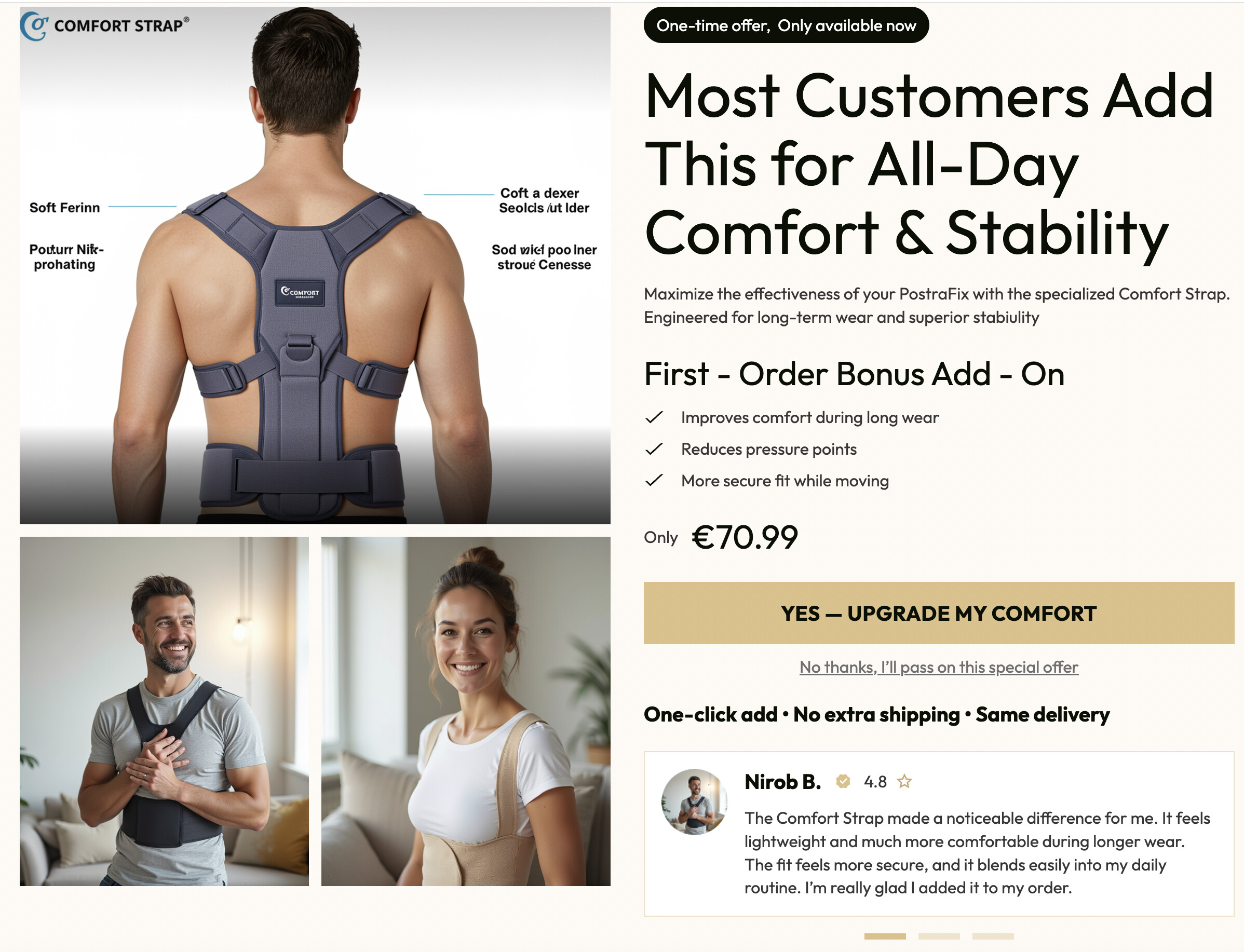
No menus. No distractions. No places to get lost. Just a high-converting, straight line from interest to purchase.
Why the eCommerce Funnel Model Dominates Paid Ads
At its core, a funnel aligns with how people actually behave online today.
When someone clicks a TikTok ad, they are looking to validate an impulse decision. A funnel supports that by stripping away the noise and focusing 100% of their attention on the pitch.
It also gives you absolute control over the narrative. You dictate what they see first, how objections are handled, and exactly when the upsells are introduced.
Instead of hoping a customer “maybe” adds more to their cart, you engineer the process to multiply your profit margins without spending an extra dime on traffic.
Do Traditional Stores Still Make Sense?
Absolutely. If you’re building an established, search-driven brand with a massive SKU count and high customer lifetime value (LTV), a store structure is necessary.
But for dropshippers testing products and scaling cold traffic? A dedicated funnel simply gives you higher conversion rates, greater AOV, and the leverage you need to out-bid competitors on ads.
The Real Difference
At the end of the day, this isn’t just a debate about “Stores vs. Funnels.” It’s about the difference between letting customers wander, and actually guiding them to the sale.
The store approach says: “Here’s everything we have—take a look.”
The eCommerce funnel approach says: “Here’s exactly what you need—and here’s why.”
That shift in user experience isn’t just a design choice. It’s the difference between barely breaking even on ad spend… and actually scaling profitably.
 Curious to hear from the Funnelish community:
Are you currently sending your top-of-funnel traffic to a traditional store product page, or directly into a dedicated funnel? For those who have split-tested both, what happened to your CVR and AOV? Let’s discuss below! 